

In Sistan-Baluchestan, activists and armed groups alike see the escalating conflict as a historic moment, one that could either deepen instability or change the lives and future of millions
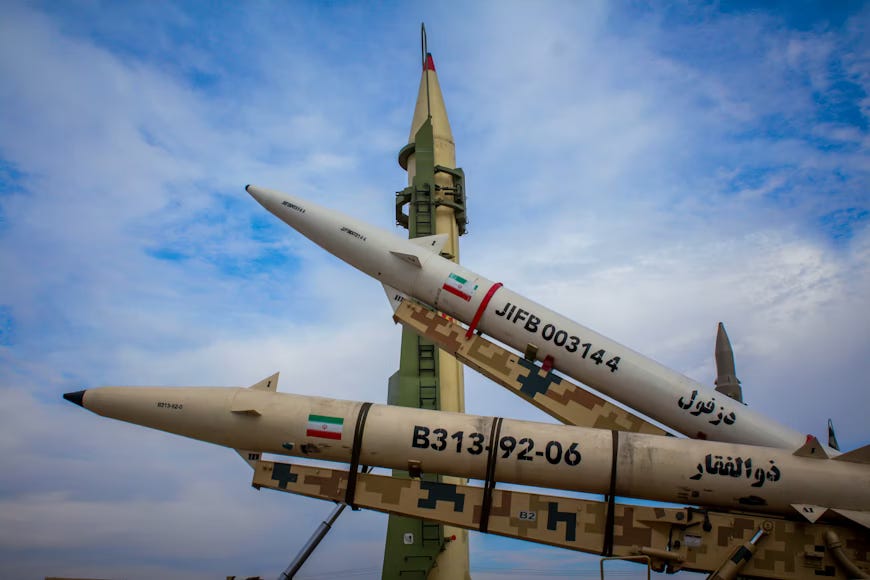
As Israel and the United States continue coordinated military strikes on targets across Iran, and Tehran retaliates against sites in Dubai, Doha, Bahrain, and Kuwait, locations hosting US military facilities or allied to Washington, the conflict is reverberating far beyond the immediate exchange of fire.
Explosions and smoke have been reported in Tehran and other cities, while Iranian state media say at least 53 people were killed at a girls’ school amid the violence. Alongside the external confrontation, a more complex question is emerging: how will renewed war pressure affect Iran’s fragile internal balance, particularly in long-restive provinces such as Sistan-Baluchestan?
For decades, the south-eastern province bordering Pakistan and Afghanistan has been the scene of a violent low-level insurgency, with elements of Iran’s ethnic Baloch minority demanding greater rights, autonomy, and an end to what they describe as systemic discrimination.
A moment seen as “historic” by Baloch political circles
Since the strikes began, the People’s Resistance Front, a coalition active in eastern Sistan-Baluchestan, has circulated more than 10 videos on its social media channels showing thick plumes of smoke rising from military installations and airbases in the province. The group presents the footage as evidence that the state’s grip on security is weakening.
The group’s messaging frames the external attacks as a turning point. Its leaders say the Iranian system, in power for 47 years, has not only suppressed Baloch political and cultural expression but has also imposed harsh measures on other minorities, including Kurds, Arabs, Turkmen, and, increasingly, Persian opposition voices.
They describe long-standing grievances: mosques and homes allegedly destroyed, cultural rights restricted, young Baloch men persecuted or executed, and deep economic marginalisation in one of Iran’s poorest regions. Many Iranian Baloch view the current escalation as an opportunity to push collectively for change.
However, most opposition voices stress that they are not advocating separation from Iran. Instead, they say their aim is full autonomy within the country, alongside dignity, equal treatment, and recognition of their identity. The present moment, in their view, should be used to unite with others seeking reform or systemic change rather than fragment the state along ethnic lines.
What is the People’s Resistance Front?
The political and militant landscape in Sistan-Baluchestan has long been fragmented. In December 2025, the Sunni militant group Jaish al-Adl announced it had joined several smaller Baloch paramilitary organisations to form a new coalition targeting Iran’s clerical establishment. The alliance, often referred to as the Popular Fighters Front or People’s Resistance Front (Jabheh-yi Mubarizin-i Mardumi), signalled an attempt to consolidate disparate armed factions under a single banner.
Supporters say unity strengthens their political leverage and their ability to coordinate messaging during a national crisis. Critics, however, argue that the involvement of armed groups risks further militarising an already volatile province and complicating any broader reform movement.
The Baloch and the Kurds have historically been among the most persistent centres of resistance within Iran. While some voices have called for complete independence, others advocate a federal model or expanded regional autonomy. What unites them is a perception of long-standing exclusion from political power and economic development.
The risks of internal breakdown and regional impact
Despite widespread dissatisfaction in parts of the country with Iran’s current regime, central authorities have maintained strong control over key state functions, particularly border security. Iran sits astride critical narcotics trafficking corridors stretching from Afghanistan through Iran and Turkey into Europe. Another major route runs via maritime channels along the Gulf of Oman and the Makran coast.
A serious internal security breakdown in Iran could have consequences well beyond Iran’s borders. A weakened Iranian state might create openings for narcotics networks to expand operations along established land and sea routes, affecting regional and European security.
There are also concerns about cross-border militancy. Iran’s Sistan-Baluchestan province shares a long, porous frontier with Pakistan’s Balochistan province, where a separate insurgency has simmered for years. Escalating instability on the Iranian side could embolden militant groups, facilitate arms flows, or encourage fighters to move across the border. That, in turn, could strain already delicate relations between Tehran and Islamabad, and risk drawing Pakistan into a cycle of retaliatory security operations. Any sustained breakdown could also complicate counter-terrorism coordination between the two countries.
Jihadist threat
There is also concern about jihadist threats. The Islamic State (IS) has long viewed Iran as an enemy and has carried out deadly attacks inside the country, including twin bombings in Kerman in January 2024 that killed nearly 100 people. A distracted or fragmented state apparatus could provide space for extremist networks such as IS to regroup. Any resurgence could pose broader risks to Afghanistan, Pakistan, and Turkey.
Between opportunity and uncertainty
For many opposition voices in Iran, the current escalation is being cast as a rare political opening after decades of marginalisation. For Iran’s ethnic minorities, if change comes, they argue it must deliver rights and autonomy within a reimagined Iranian framework, not simply replace one form of centralised power with another.
There are also fears. External military pressure may weaken Tehran’s authority, but it could also trigger harsher crackdowns in peripheral provinces, deepen instability, and empower non-state actors such as jihadists, drug traffickers, human traffickers, smugglers, and criminal gangs whose agendas diverge sharply from those of non-violent activists seeking reforms in Iran.
As missiles and drones dominate headlines, Iran’s internal fault lines are once again exposed. Whether the crisis leads to reform, fragmentation, or renewed repression may depend not only on events in the skies above Tehran but also on how regions such as Sistan-Baluchestan navigate what many there already describe as a historic moment.